
Rafter Length Calculator in 3D
Turn a roof span and pitch into a common rafter length. See the body, ridge deduction, and overhang as separate measurements, with a live 3D rafter and a pitch triangle.
Explore This Calculator
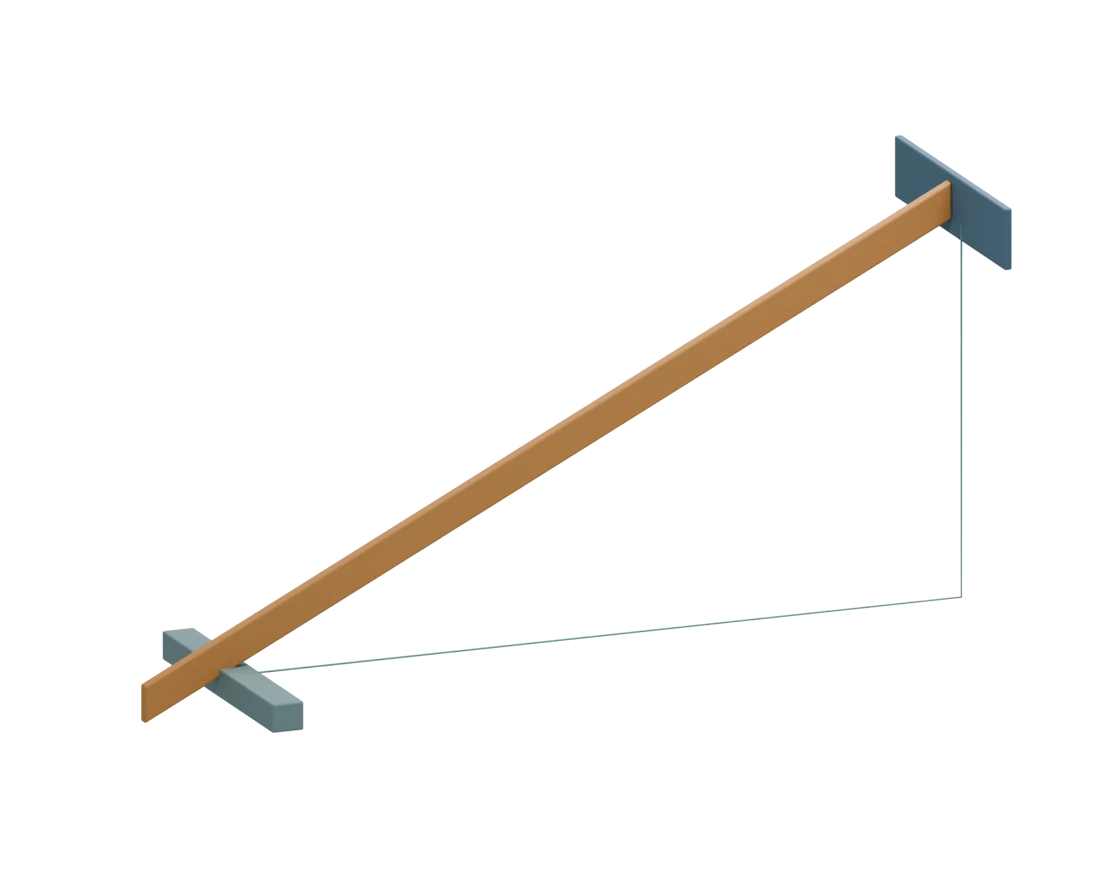 Drag to Rotate
One complete common rafter from its tail to the ridge face. The vertical board at the high end represents the ridge.
One Rafter. Three Useful Measurements.
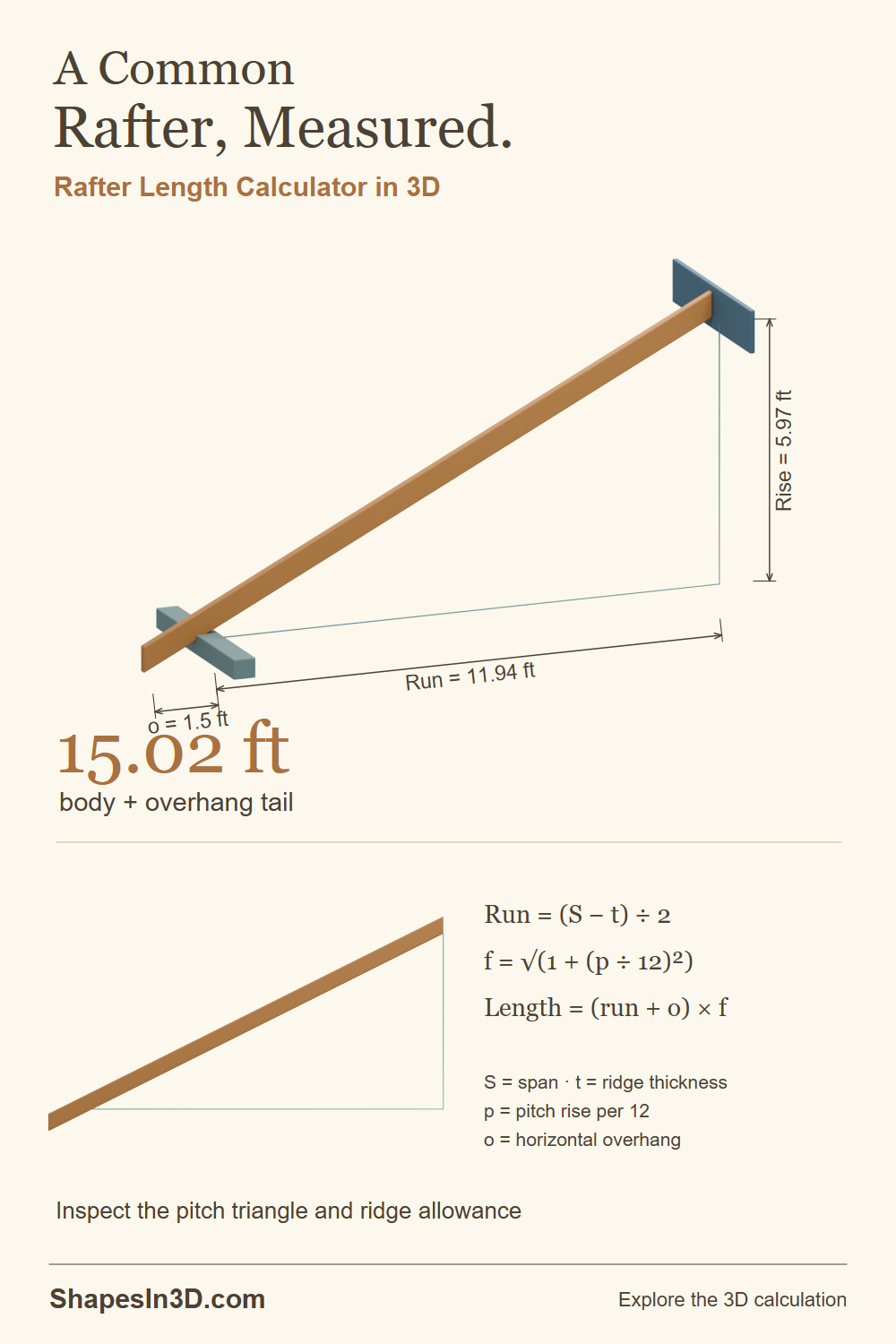
(11.94 ft + 1.5 ft) × 1.11803 = 15.02 ft
Why the Ridge Deduction Is Sloped
Half the ridge-board thickness is removed from the horizontal half-span first. The remaining run is then multiplied by the pitch factor. Subtracting a horizontal thickness directly from a sloping length would mix two different directions.
Run = (span − ridge thickness) ÷ 2
Factor = √(1 + (pitch ÷ 12)²)
Length =
(run + overhang) × factor
This calculator covers common rafters on a symmetric roof. Results are geometric line lengths, not finished lumber cuts. Rafter depth, birdsmouth, heel height, fascia cuts, structural span, and connections need separate detailing. Hip and jack rafters are not calculated.
The Pitch Factor, at a Glance
A 6:12 pitch rises six units in twelve horizontal units. The same ratio works in inches, feet, or meters. The roof angle is measured above horizontal; the complementary angle to vertical is .
| Pitch | Angle Above Horizontal | Slope Length per Unit of Run |
|---|---|---|
| 3:12 | 14.04° | 1.03078 |
| 4:12 | 18.43° | 1.05409 |
| 6:12 | 26.57° | 1.11803 |
| 8:12 | 33.69° | 1.20185 |
| 10:12 | 39.81° | 1.30171 |
| 12:12 | 45° | 1.41421 |
| 16:12 | 53.13° | 1.66667 |
| 24:12 | 63.43° | 2.23607 |
Does this include a birdsmouth cut?
No. A birdsmouth depends on the rafter depth, bearing location, heel, and permitted notch. It does not change the pitch factor but does affect the final cut layout. The model shows a plain rafter for measuring line length.
Featured Image
This featured image separates the common rafter body, overhang tail, and ridge allowance, with a smaller pitch-triangle view.
Pin ItView Featured Image