
Sun Angle Calculator in 3D
Place the sun in a local 3D sky. Choose a date, coordinates, and clock time to see solar elevation, compass direction, a vertical object’s shadow, and the sun’s path across the day.
Explore This Calculator
The initial coordinates are an example at 40° N, 105° W. Enter the UTC offset used by your clock on the chosen date, including daylight saving. Location and time are processed in this page.
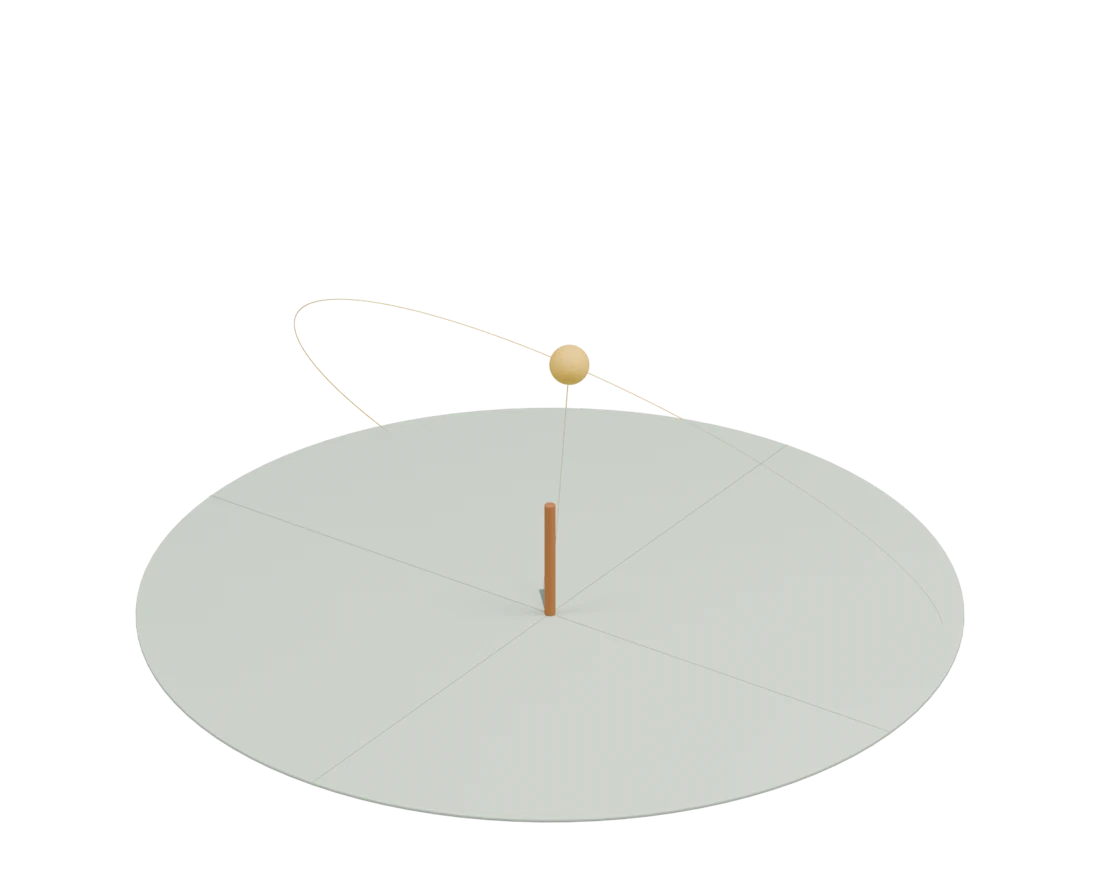 Drag to Rotate
North is marked N. The sun follows the selected day’s path. The sun’s distance is illustrative; long shadows stop at the compass edge while the numerical result remains complete.
The Shape of the Day
Times use your entered UTC offset. Solar noon is when the sun crosses the local meridian. It can differ substantially from 12:00 on the clock. At high latitudes, a date may contain no sunrise or no sunset; “No Event” is shown for that event.
See Hourly Sun Positions
| Clock Time | Elevation | Azimuth |
|---|---|---|
| 06:00 | 3.9° | 62.4° |
| 07:00 | 14.5° | 71.4° |
| 08:00 | 25.6° | 80° |
| 09:00 | 37° | 89° |
| 10:00 | 48.5° | 99.5° |
| 11:00 | 59.5° | 113.6° |
| 12:00 | 68.9° | 137.1° |
| 13:00 | 73.4° | 178.5° |
| 14:00 | 69.4° | 220.8° |
| 15:00 | 60.1° | 245.2° |
| 16:00 | 49.2° | 259.8° |
| 17:00 | 37.7° | 270.4° |
| 18:00 | 26.3° | 279.5° |
Follow the Shadow
Shadow = 2 m ÷ tan(68.91°)
The shadow points opposite the sun. It gets very long near the horizon and shrinks as the sun climbs. A sun below the geometric horizon produces no direct-beam shadow in this model.
Turn a Solar Panel
Projection is max(0, cos incidence), and is zero at night. It excludes cloud, shading, atmosphere, panel efficiency, and diffuse light.
Height, Elevation, and Shadow
Shadow length = object height ÷ tan(solar elevation)
The formula assumes a vertical object on horizontal ground. Panel tilt is measured up from horizontal, while panel facing direction uses the same clockwise-from-north convention as the sun.
The solar position is a geometric astronomical estimate for an unobstructed horizon. Sunrise and sunset use a conventional −0.833° center elevation. Terrain, buildings, weather, and local refraction can change observed times. Panel incidence describes beam geometry, not energy production or an annual tilt recommendation.
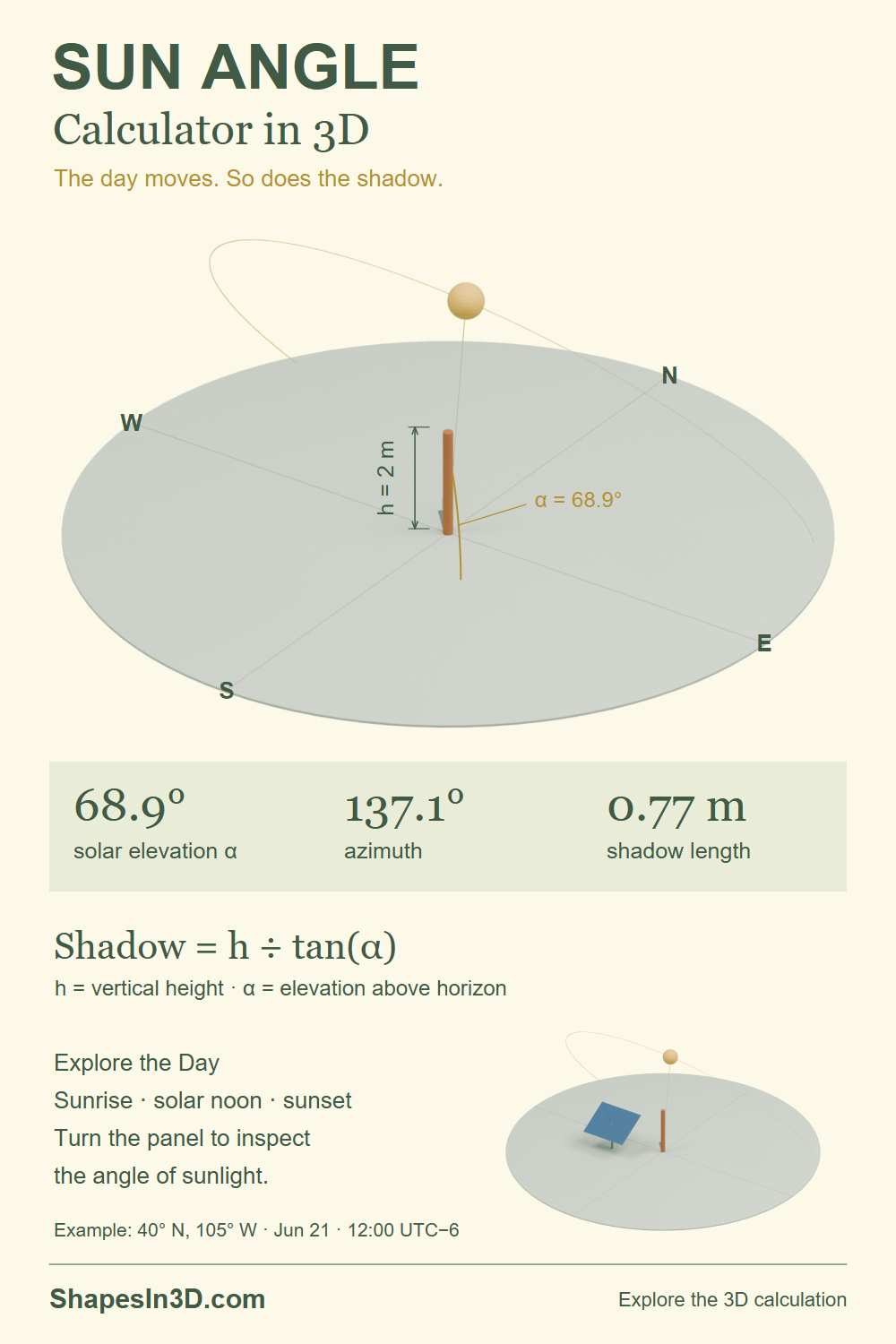
Featured Image
A sun-path scene with a measured vertical object, shadow geometry, and a smaller panel-incidence view.
Pin ItView Featured Image